

B2B Lead Generation Singapore
Lead generation in Singapore: build a pipeline, not just a contact list.
A practical guide for Singapore SMEs that need to find suitable companies, qualify genuine interest and move sales-ready leads into a consistent follow-up process.
The Singapore context
Why B2B lead generation is difficult for SMEs.
Singapore is a compact market, but it is not automatically an easy market. Buyers have many choices, decision-makers are busy and a small sales team must often prospect, reply, quote and service existing customers at the same time.
The Singapore Business Federation’s 2025 National Business Survey reported manpower cost and uncertainty in customer demand among the leading business challenges. For an SME, this means that simply adding more callers is expensive, while an inconsistent pipeline leaves utilisation and revenue exposed.
Effective B2B lead generation in Singapore therefore depends on focus. A company needs a clear account profile, accurate business information, relevant outreach, disciplined qualification and a reliable way to continue the conversation.
Important distinction: a lead is not just a name or telephone number. It becomes commercially useful when there is a relevant company, a reachable stakeholder, a plausible need and an agreed next action.
Reference: Singapore Business Federation, National Business Survey 2025.
Six common bottlenecks
Where a Singapore SME pipeline usually breaks.
Most teams do not have one lead-generation problem. They have several connected gaps that compound as a prospect moves through the funnel.
Broad targeting
Industry alone is rarely an adequate filter. Company size, location, operating model, current systems, buying trigger and likely decision-maker all affect fit.
Incomplete discovery
Lists become stale, duplicates appear and public information is scattered. Time is wasted researching accounts that do not match the offer.
Weak first contact
A generic pitch gives the buyer no reason to continue. The opening must explain relevance quickly and respect the recipient’s time.
Shallow qualification
Interest is recorded without confirming need, authority, timing, budget context or a practical next step. Sales then receives low-intent enquiries.
Follow-up leakage
Promising conversations remain in notebooks, inboxes and spreadsheets. When ownership or the next action is unclear, warm leads quietly go cold.
No feedback loop
Teams count calls or messages but do not learn which segments, problems and conversations produce qualified opportunities.
A practical funnel
Lead generation is a connected operating process.
Each stage should have a clear purpose, owner and exit condition. Moving every contact directly to a salesperson creates noise; moving only properly qualified prospects creates focus.
Qualification discipline
Separate curiosity from sales readiness.
A useful qualification conversation is short enough to respect the prospect and specific enough to protect the sales team’s time. Questions should sound natural, not like an interrogation.
- Fit: Is this the type and size of company the offer is designed for?
- Problem: Is there a relevant operational, sales or service need?
- Current approach: How is the company handling the issue today?
- Priority and timing: Is change being considered now, later or not at all?
- Stakeholder: Is the contact involved in evaluation or able to direct the conversation?
- Next action: Has the prospect agreed to receive details, arrange a call or close the enquiry?
Not every contact should become a meeting. “Not suitable”, “not now” and “send information first” are useful outcomes when they are recorded correctly.
Responsible outreach
Public business information still requires good judgement.
Singapore’s PDPA generally treats business contact information differently from personal information, and the DNC provisions include an exception for messages genuinely targeting businesses. That does not make indiscriminate outreach a good practice.
Keep the purpose relevant to the recipient’s business role, identify the organisation clearly, use accurate information, avoid concealing caller identity and maintain a suppression process for people who do not want further contact. A business-facing message should not be used as a pretext to market to someone in a personal capacity.
Organisations remain responsible for how their employees, vendors and automated systems collect, use and maintain information. Build governance into the workflow instead of treating compliance as a script at the end.
References: PDPC overview of the PDPA and DNC Registry guidance for businesses. This page is general information, not legal advice.
Measure the system
Use funnel metrics, not activity alone.
A high call or message count can hide poor targeting. Track the measures that explain both volume and quality.
| Measure | What it reveals | Useful question |
|---|---|---|
| Account coverage | How much of the intended market has been researched. | Are we reaching enough of the right companies? |
| Valid contact rate | The quality and currency of business information. | Are we losing time to outdated or irrelevant records? |
| Connection rate | Whether channel, timing and contact selection are working. | Can we reach a relevant stakeholder? |
| Qualified lead rate | The proportion with fit, need and a credible next step. | Is our targeting producing sales-relevant conversations? |
| Speed to follow-up | How quickly interest becomes a continued conversation. | Are warm leads waiting too long? |
| Opportunity conversion | Whether qualified leads become genuine sales opportunities. | Does the handover contain enough context? |
| Leakage rate | How many leads have no owner, stage or next action. | Which prospects are being forgotten? |
ADSM AI sales automation
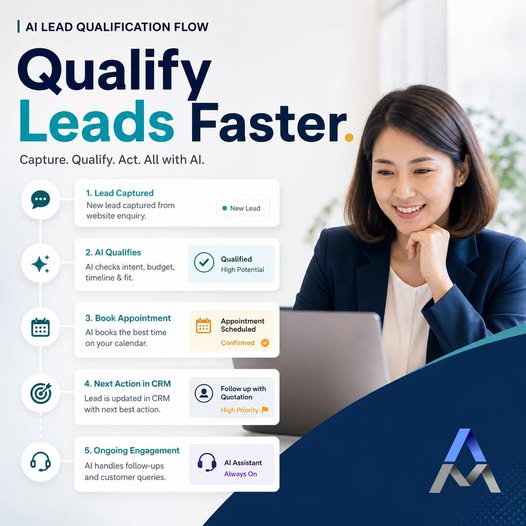
Connect discovery, qualification, follow-up and CRM.
ADSM can connect these stages around your sales process. The standard AI cold calling plan includes 1,000 monthly minutes, portal access and qualified-outcome routing or export to Google Sheets. Lead discovery, AI WhatsApp and CRM integrations are scoped separately. People review the outcomes and handle detailed discussions, proposals and closing.
The loop: CRM outcomes show which segments and conversations convert, improving the next round of discovery and qualification.
Where automation helps
Scale the repetitive work while keeping people in control.
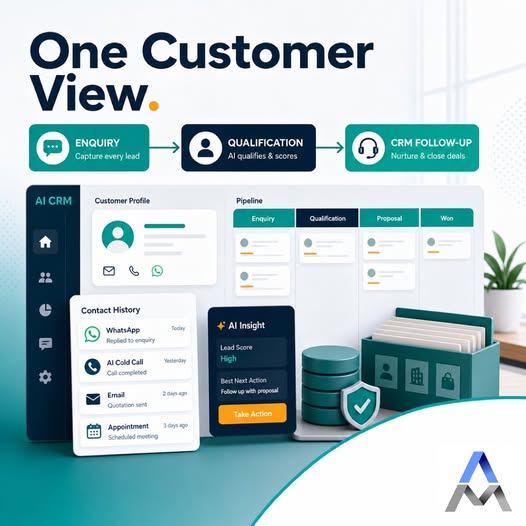
Manual prospecting can work at small volume, but it becomes fragile when research, calls, messages and follow-up live in separate tools. Automation is most valuable where the work is repeatable and the decision rules are clear.
Consistent coverage
Apply the same customer profile and qualification rules across a larger account set.
Faster handover
Send a salesperson the prospect’s context, questions and agreed next step.
Visible pipeline
Know which leads are new, contacted, interested, nurturing or sales-ready.
Human involvement remains important for complex discovery, sensitive conversations, negotiation, proposals and relationship building.
Implementation
Start with a controlled pilot.
A useful pilot proves the targeting and workflow before volume is increased.
Define the market
Agree industries, company characteristics, exclusions, target roles and the business problem the outreach will address.
Set data rules
Define acceptable public sources, required fields, data review, suppression and retention practices.
Design qualification
Create a concise call flow, expected answers, escalation rules and clear lead-status definitions.
Connect the handover
Decide when WhatsApp is appropriate, what the CRM records and when a salesperson takes over.
Run a limited batch
Review connection, qualification, objections, opt-outs and data quality before expanding.
Improve from outcomes
Refine the customer profile, script and follow-up based on opportunities created, not activity volume alone.
Frequently asked questions
B2B lead generation Singapore FAQ.
What is B2B lead generation?
B2B lead generation is the process of identifying suitable companies, reaching relevant business stakeholders, confirming potential need and moving qualified prospects towards a commercial conversation.
Is buying a large contact list enough?
No. A list without a defined customer profile, current information, relevant outreach, qualification and follow-up usually creates activity rather than pipeline.
Can public company information be used for B2B outreach in Singapore?
Public business information may support genuine business outreach, but organisations should still confirm the purpose is relevant, apply the PDPA and DNC rules correctly, identify themselves and honour opt-out requests. Obtain legal advice for your specific campaign where needed.
How does AI improve lead generation?
AI can assist with repetitive discovery, structured first contact, qualification, follow-up and CRM updates. People should continue to manage exceptions, nuanced sales conversations and important decisions.
Does ADSM provide only AI cold calling?
No. ADSM can connect lead discovery, AI cold calling, AI WhatsApp follow-up and AI CRM according to your requirements. These services are scoped separately. The S$900/month cold calling plan includes 1,000 calling minutes, portal access and Google Sheets routing or export; WhatsApp and CRM integrations are not included in that subscription.
Build a more reliable pipeline
See how the ADSM workflow fits your sales process.
Explore the AI cold calling solution, or discuss a focused lead-generation and qualification pilot for your Singapore business.