

An AI lead generation system helps a business discover relevant companies, organise prospect information and run an approved qualification workflow. It does not turn every public contact into a qualified buyer. The useful outcome is a lead with a clear need, a recorded conversation and an agreed next step.
For a Singapore SME, the challenge is often the gap between finding a company and following through. A spreadsheet of names is only the starting point. Someone still needs to check relevance, contact the right business, understand its requirements and keep the opportunity moving.
Start with a defined B2B prospect profile
Choose the industries, locations and business needs your team can genuinely serve. An industrial supplier, for example, could focus on relevant distributors and engineering companies instead of contacting every business in a directory. Record why each company fits your offer.
ADSM lead discovery uses publicly available company and contact information to support this research. Keep the source and check date, remove duplicates, and verify that contact details still belong to the intended business. Public information can be outdated; a published number is not proof of buying interest or permission for every marketing channel.
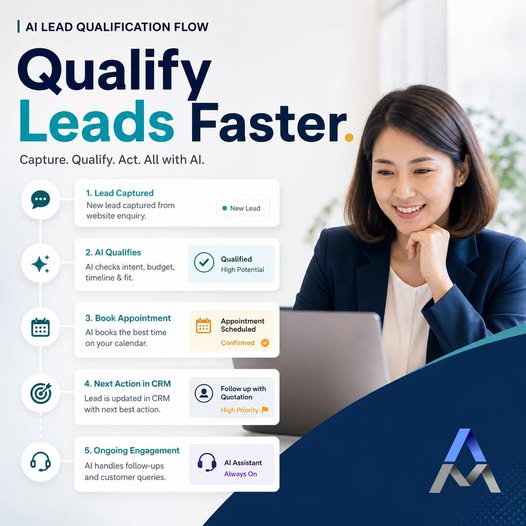
Qualify the opportunity before increasing outreach
An approved AI calling workflow can ask consistent questions, record responses and separate interested prospects from wrong numbers, unsuitable companies and requests not to be contacted again. Define what qualifies as a useful lead before launching the campaign.
- Fit: does the company match your target market and service scope?
- Need: what problem or requirement did the contact actually describe?
- Timing: is there a current project, a later review date or no planned purchase?
- Next step: has the person agreed to a callback, information or a sales conversation?
A lead score is a prioritisation aid, not proof that a prospect will buy. Review conversation samples and let your team correct mistaken summaries or classifications.
Review call results in the portal
With ADSM AI cold calling, your team can review call recordings, summaries, statuses and outcomes in the portal. The standard plan also routes qualified outcomes to Google Sheets, giving sales staff a practical follow-up list. A useful handover includes the stated need, next action and responsible owner, not just a telephone number.
Extend the workflow when a prospect is interested
AI WhatsApp is an optional add-on that can help continue an appropriate, permitted conversation with approved answers and staff handover. It is separately scoped and priced, rather than included automatically in the standard cold calling plan. An AI CRM workflow can also be added where the team needs a shared pipeline, assigned tasks and quotation follow-up.
Set Singapore outreach safeguards before launch
Review the audience, message purpose and channel before activating outreach. PDPC guidance on the Do Not Call provisions explains the distinction between business-to-business messages and other marketing messages. Do not assume that every mobile number found online falls within a B2B exclusion. Apply the relevant checks or consent requirements, identify the business clearly and respect opt-outs. Check platform messaging rules separately. Seek advice where the classification is uncertain.
Measure qualified handovers, not just activity
Track valid contacts, connected conversations, qualified outcomes, accepted next steps and opportunities won. Include staff review time and the full campaign cost when assessing results. More calls alone do not show that lead quality has improved.
Start with a manageable prospect group and review the outcomes before scaling. Our B2B lead generation guide for Singapore SMEs explains how discovery, qualification and follow-up fit together. Interested businesses can request a demo and discuss a free trial to understand how the calling workflow would work for their own offer.